2025 Cohort and Projects
The 2025 student cohort will be working on a variety of topics spanning the breadth of our themes and working alongside a number of our industry partners. Please see below for a description of the current projects.
-
A Toolbox for Quantum-Enhanced ImagingHeriot-Watt University
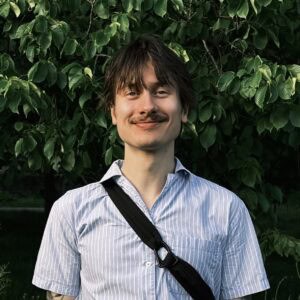
Student: Philipp Oleynik
Primary Supervisor: Professor Jonathan Leach
Project Description: This PhD project aims to develop a comprehensive toolbox for quantum imaging, addressing performance and integration challenges in practical systems. It will include components, software, and methods to enable high-resolution, noise-robust imaging using silicon sensors sensitive to mid-infrared wavelengths. The project leverages quantum entanglement, induced coherence, advanced single-photon cameras, and novel computational algorithms. Current nonlinear systems face resolution and field-of-view limits due to crystal constraints. By using spatial and temporal structured light modes, this project seeks to overcome these limitations, applying successful techniques from conventional microscopy to enhance nonlinear quantum imaging performance.
Short Bio: I’m a second-year PhD student at the CDT in Applied Quantum Technologies and my research focuses on quantum correlations, with particular emphasis on their spatial properties and their applications in quantum information, quantum communications and quantum imaging. During my doctoral studies, I have contributed to a range of research projects and presented my work at Optica Quantum 2.0 2026, an international conference held in Glasgow. I’m especially drawn to the collaborative aspect of experimental research, particularly valuing and enjoying the process of designing, constructing and refining experimental systems as part of a team.
My longer-term ambition is to help translate proof-of-concept advances in quantum imaging and sensing into practical technologies that can benefit both industry and the wider research community.
-
Advancing the performance of next-generation of compact optical atomic clocksUniversity of Strathclyde
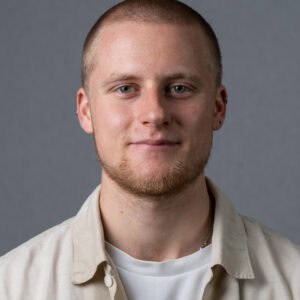
Student: Cameron Church
Primary Supervisor: Professor Paul Griffin
Industry Partner: Fraunhofer Centre for Applied Photonics
Project Description: This project will involve the study of optical atomic clocks, with the goal of demonstrating a compact and accurate atomic sensor. This project will build on the joint expertise at Strathclyde and a the Fraunhofer Centre for Applied Photonics to develop a compact atomic clock systems for portable operation, while providing performance beyond the commercial state-of-the-art. Specific areas of expertise to be explored at the construction and development of narrow-linewidth lasers for low-noise interrogation, optimised optical system design for compact optical clocks, maximising the signal-to-noise ratio of background-free detection channels, and a broad exploration of atom-light interactions in atomic gasses. Our groups have strong links to NPL, Quantum Technology Hubs, and UK and international collaborators, which will help drive the success of this ambitious experiment that incorporates atomics, optics, integrated photonics, and real-world applications.
Short Bio: I completed my undergraduate studies at UCL and am now in the second year of my PhD at Strathclyde. Optical atomic clocks, the theme of my research, offer the most precise timing platforms that we have, but historically their operation has been constrained to laboratory environments. My work aims to mitigate such constraints, and looks at developing optical clocks that are robust, portable and repeatable. I also enjoy participating in public engagement activities, including being part of the winning team of the photonic quantum accelerator’s competition to develop an engaging outreach activity. I am interested in a research-based career trajectory, in either academia or industry.
-
Advancing the state-of-the-art of microfabricated atomic sensorsUniversity of Strathclyde
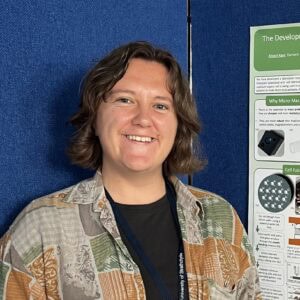
Student: Abigail Kaye
Primary Supervisor: Dr James McGilligan
Industry Partner: Kelvin Nanotechnology
Project Description: This PhD project focuses on advancing MEMS atomic sensors, which use atomic properties to measure time, magnetic fields, and inertial forces with exceptional precision. The work will address challenges in microfabrication, pressure control, on-chip electronics, and optical integration to enhance device performance and scalability. In collaboration with academic and industry partners, the researcher will develop new vapour cell designs and fabrication methods, integrating them into quantum sensors such as magnetometers, clocks, and memories. The project offers hands-on experience in quantum technologies, microfabrication, and precision measurement, with access to world-class facilities and expertise at the University of Strathclyde and Kelvin Nanotechnology.
Short Bio: I’m Abi and I’m a second year PhD student, studying at the University of Strathclyde as part of the AQT CDT. I moved to Glasgow in September 2025 after graduating from Durham University and taking a gap year to travel. I am working on miniaturising the atomic sensors used in transportable optical clocks, in particular microfabricated silicon vapour cells for a compact 87Rb 2-photon clock. After my PhD, I see myself continuing to do research between the worlds of academia and industry, bringing new ideas in atomic and optical physics to commercialisation. In my spare time I enjoy indoor and outdoor swimming, playing squash and going to gigs.
-
Optical Ground Station Measurements with In-Orbit Satellite Quantum Communications MissionsHeriot-Watt University

Student: Brandon Reade
Primary Supervisor: Dr Ross Donaldson
Project Description: Join the forefront of quantum technology research with this groundbreaking PhD project focused on measurements of in-orbit quantum communications satellites. Leveraging the state-of-the-art Heriot-Watt Optical Ground Station (HOGS), this project aims to push the boundaries of secure communication by exploring the practical applications and challenges of quantum key distribution (QKD) in space.
-
Dynamics of spontaneous magnetic multipole orderingUniversity of Strathclyde

Student: Kelsey O’Donnell
Primary Supervisor: Professor Thorsten Ackemann
Project Description: This PhD project explores exotic magnetic phenomena in rubidium-based cold atom systems using light-mediated interaction between Zeeman spin states controlled by real magnetic fields. Focusing on quadrupolar and dipolar ordering, it aims to investigate spontaneously emerging magnetic phases, including drifting multipolar spin density waves—an out-of-equilibrium phenomenon linked to dissipative time crystals. The work will involve optical and microwave imaging, Stokes parameter measurements, and analysis of excitation spectra to understand phase stabilization mechanisms. It also examines skyrmions and magnetic bubbles relevant to spintronics. Theoretical modelling uses a nonlinear density-matrix approach, with potential applications to magnetometry. Collaboration includes Université Côte d’Azur, France.
Short Bio: I’m a second year Physics PhD student at the University of Strathclyde, interested in complex phase transitions and self organisation in light matter systems. My work looks at pattern formation and phase transitions in magnetic systems, Bose Einstein condensates, optomechanical systems and other related platforms, with a particular interest in light mediated long range interactions and supersolids, including supersolids of light. I mainly work on the analytical and numerical side, studying how these self organised phases form and behave.
Before starting my PhD, I completed an MPhys in Theoretical Physics at the University of St Andrews, where my Masters project focused on open quantum systems and quantum transport through networks of coupled quantum emitters. I’m also interested in QED and differential geometry
-
Exploring 2D quantum materials with a single-spin quantum sensorHeriot-Watt University
Student: Angus Conley
Primary Supervisor: Professor Cristian Bonato
Project Description: This PhD project offers a unique opportunity to explore condensed matter physics using a cutting-edge quantum sensor: the spin of a single electron in diamond. This sensor, part of the world’s first commercial low-temperature scanning spin-based system, maps magnetic fields with nanoscale precision across a wide temperature range (1.6–300K). The project aims to investigate novel 2D quantum materials and heterostructures—such as superconductors and magnetic systems—created at Heriot-Watt University. By probing magnetic textures and superconductivity at the atomic scale, this research will uncover emergent phenomena relevant to future “beyond-silicon” electronic technologies.
-
Generation of quantum light states with low-noise-VECSEL-pumped optical parametric oscillatorsUniversity of Strathclyde
Student: Miriaidh Reid
Primary Supervisor: Professor Jennifer Hastie
Project Description: This PhD project explores the quantum properties of a novel, compact light source: a VECSEL-based optical parametric oscillator (OPO). Unlike typical intracavity OPOs, VECSELs offer ultra-low intensity noise, down to shot-noise-limited performance. Our group recently demonstrated the first single-frequency, tuneable VECSEL-driven intracavity OPO. This project will be the first to investigate its quantum behaviour across operating regimes: below threshold, twin-beam generation above threshold, and potential individual beam squeezing far above threshold. Success could lead to compact, transportable sources of non-classical light for quantum imaging, spectroscopy, and trace gas detection in real-world applications.
-
Matter-wave interferometry in microphotonic waveguidesUniversity of Strathclyde
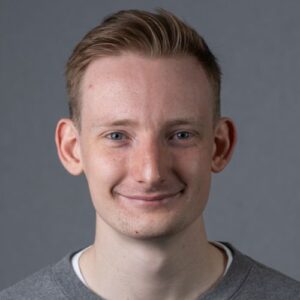
Student: Martin Atkinson
Primary Supervisor: Professor Paul Griffin
Project Description: This PhD project focuses on developing high-precision quantum devices using ultracold atoms for next-generation sensing and navigation. The aim is to create compact, ultra-sensitive matter-wave interferometers using atomic waveguides—analogous to fiber optics for atoms—for rotation sensing. Working with Bose-Einstein condensates (BECs), the research will explore optical ring traps and atom-guiding geometries to enhance phase sensitivity far beyond that of traditional gyroscopes. Based at the University of Strathclyde, the project offers hands-on experience in cutting-edge quantum technologies, laser cooling, and chip-based systems, with opportunities for collaboration in a multidisciplinary team working on quantum navigation solutions.
Short Bio: I completed my MSci in Physics at the University of Birmingham in 2025. While there, I grew interested in condensed matter physics and quantum technologies. During my third year I was able to work on a laser system for atom interferometry within the quantum sensing research group at Birmingham. Following this, I continued to work with the group for my master’s project where I explored the use of optically pumped magnetometers for corrosion detection in pipes. At Strathclyde I am continuing to build atom interferometry systems where I now research compact systems for rotation sensing. Beyond physics, I enjoy hiking and mountaineering, and can regularly be found spending my weekends in the Scottish Highlands.
-
Integrated quantum memories for single photons for enhanced spatial multiplexingHeriot-Watt University

Student: Tymon Fellmann
Primary Supervisor: Dr Margerita Mazzera
Project Description: This project aims to demonstrate an integrated quantum memory for single photons using fs-laser written waveguide in rare earth doped crystals. Rare earth ions offer exceptional coherence properties, ideal for high- performance quantum memories. The chosen protocol targets ultra-high storage efficiency without optical cavities. Massive multiplexing capabilities will be enhanced by spatial multimodality through multiple independently operated memories on a single chip. Integrated Bragg reflectors will boost light-ion interaction, enabling advanced functionalities such as non-destructive single-photon detection.
Short Bio: I’m Tymoteusz Fellmann, a second-year PhD student in the Institute of Photonics and Quantum Sciences (IPaQS) working in the Quantum Photonics Laboratory, supervised by Prof. Margherita Mazzera. My research focuses on quantum memories based on rare-earth-ion-doped crystals. These devices store single photons and release them on demand, and they are key to scaling up photonic quantum computing and quantum networks. My project aims to build a fully integrated, high-efficiency quantum memory in praseodymium-doped crystals, combining laser-written waveguides, direct fibre coupling and on-chip electrodes. In my first year I worked on developing a numerical simulation framework for light-matter interactions and used it to develop new variants of the gradient echo memory protocol. I also worked extensively on our cryogenic and laser systems ahead of the first experiments on the integrated device. In the future, I hope to pursue a career in quantum technology research in academia or industry.
-
Quantum Photonics in Space and TimeHeriot-Watt University

Student: Sam Donachie
Primary Supervisor: Professor Mehul Malik
Project Description: This PhD project at the Beyond Binary Quantum Information (BBQ) Lab, Heriot-Watt University, explores advanced quantum technologies using complex entangled states of light. Moving beyond qubits, it will study entanglement in high-dimensional properties like position, time, and frequency to develop robust quantum communication and imaging systems. Research will involve both theoretical and experimental work in structured light, multi-photon entanglement, and scattering media. The researcher will undertake work in quantum photonics, programming, and entanglement theory, with opportunities for international collaboration, conference travel, and skill development. The BBQ Lab, led by Prof. Mehul Malik, is internationally recognized and equipped with cutting-edge facilities and strong global partnerships.
Short Bio: I’m Samuel Donachie, a second-year PhD student in quantum optics at Heriot-Watt University in Edinburgh, working in the BBQLab under the supervision of Mehul Malik. My research focuses on building a reliable, reprogrammable and efficient multi-plane light converter (MPLC) to manipulate spatial modes of light, opening the door to experiments in high-dimensional photonics. Before my PhD, I interned in Paris, using IonQ and Quandela quantum computers to solve partial differential equations with variational quantum algorithms. That work led to a published article and a presentation at the Quest-IS 2025 conference. Looking ahead, I’d love a career that blends problem solving, managing projects, and communicating science to experts and the wider public alike.
-
Thermal effects in cryogenic electronics for quantum computingUniversity of Strathclyde

Student: Poppy McPeake
Primary Supervisor: Dr Alessandro Rossi
Industry Partner: Quantum Motion Technologies (QMT)
Project Description: This PhD project tackles one of quantum computing’s key engineering challenges: managing heat in cryogenic environments. As quantum processors must operate at ultra-low temperatures, integrating classical control electronics near the quantum chip is difficult due to heat generation and complex thermal behaviour. This project focuses on developing CMOS-compatible thermometry techniques and chip-scale thermal mapping under realistic operating conditions. You’ll also work on accurate thermal modelling for circuit design. Based primarily at the University of Strathclyde’s SEQUEL Lab, with collaboration and training opportunities at the National Physical Laboratory and Quantum Motion Technologies, this research supports the scalable development of next-generation quantum computers.
Short Bio: I am a second-year PhD student at the University of Strathclyde in the Semiconductor Quantum Electronics group (SEQUEL). I previously completed my undergraduate studies at Queen’s University Belfast where I obtained my MSci Physics with year in industry (STFC ISIS Neutron and Muon Source) with a focus in solid state physics, nanoscience, and materials characterisation. Upon completion of my PhD, I would like to work in the semiconductor or quantum computing industry. I also volunteer for a STEM outreach charity called the UK Space Design competition for students aged 15-18 to develop their soft skills under a collaborative, industry simulation-style engineering environment.
-
Ultra-high common-mode noise rejecting geomagnetic gradiometerUniversity of Strathclyde
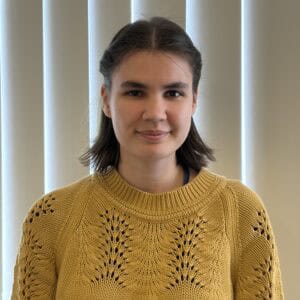
Student: Alexandria Swain
Primary Supervisor: Dr Stuart Ingleby
Industry Partner: MBDA
Project Description: This PhD project focuses on developing optically pumped quantum magnetometers (OPMs) for high-precision geomagnetic positioning, particularly in challenging environments such as airborne platforms, ships, and drones. These magnetometers offer femto-tesla sensitivity and compact, portable design, but real-world applications require advanced noise rejection. The project will advance magnetic gradiometry techniques, utilizing alkali spin maser methods and microfabricated caesium cells to achieve very high common-mode noise rejection (CMNR). The team will work closely with MBDA on UAV trials and explore the potential dual-use applications of this technology in healthcare and biomedical fields. The project will integrate cutting-edge research at the University of Strathclyde for practical, high-impact solutions.
Short Bio: I’m a second-year PhD student at the University of Strathclyde where I work on optically pumped magnetometers for unshielded applications where magnetic background noise impacts the resolution and discrimination of the measured signals. Previously, I studied at the University of Glasgow where I graduated with an MSci in Theoretical Physics. After my PhD, I hope to find a job in industry, where I would be able to continue working on the development of quantum sensors.
-
Vortex pinning dynamics in a quantum fluidUniversity of Strathclyde

Student: Elizabeth Farr
Primary Supervisor: Dr Kali Wilson
Project Description: This PhD project will explore the role of vortices, or quantum whirlpools, in superfluid and superconducting systems, focusing on vortex pinning dynamics. Superfluids formed of ultracold atoms offer an ideal system to study these quantum effects, with precise control over interactions, geometry, and vortex nucleation. The student will investigate the interaction between vortices and pinning potentials, which are crucial for high-temperature superconductors and the internal dynamics of pulsars and neutron stars. The project will involve designing optical systems for vortex nucleation and conducting a detailed study of vortex-pin interactions, providing expertise in quantum technologies, optics, and atomic physics.
Short Bio: I joined the CDT after completing my undergraduate and master’s degrees at the University of Strathclyde, where I’m now entering the second year of my PhD in experimental cold atom physics. My project is currently building a Bose-Einstein condensate apparatus, which we will use to study superfluidity in quantum systems. I enjoy the project because it’s a nice mixture of exploring interesting theoretical ideas to test in the experiment, and also the hands-on, technical task of building it, so there’s lots of variety in the workday. In the future I would like to continue working in a research environment, exploring fundamental physics where there are lots of open-ended questions to find the answers to.
-
Chip-scale Terahertz Technology DevelopmentUniversity of Glasgow

Student: Maryam Allamki
Primary Supervisor: Dr Kaveh Delfanazari
Project Description: This project explores the integration of materials into novel device and circuit architectures that operate in the THz frequency range. As THz technology plays an increasingly important role in applications spanning health and environmental monitoring and nondestructive analysis and testing, there is an urgent need to miniaturize and enhance the performance of THz components. The project involves the end-to-end design and simulation of THz components. Emphasis is placed on achieving high spectral purity, and electrical tunability, using innovative material systems and nanofabrication techniques. Research will span the electromagnetic spectrum from microwave to near-infrared, bridging gaps between conventional electronics and photonics. PhD candidates will gain hands-on experience in nanofabrication, thin-film deposition, lithography, THz measurements, and circuit modeling. The project offers opportunities for collaboration with international experts and access to state-of-the-art cleanroom and testing facilities.
Short Bio: I am a PhD researcher in the Applied Quantum Technologies CDT at the University of Glasgow. My research focuses on developing chip-scale quantum technologies, with particular interests in superconducting quantum devices, nanofabrication, terahertz technologies, and quantum communications. My PhD project involves the design, fabrication, and experimental investigation of BSCCO-based quantum sensors, combining electromagnetic simulations with cleanroom nanofabrication and optical characterisation.
I hold a BSc (Hons) in Physics from the University of Glasgow, where my undergraduate research involved the characterisation of pixel detector modules for the ATLAS Inner Tracker upgrade at CERN. I am particularly interested in bridging fundamental physics with practical quantum-device engineering. Looking ahead, I hope to contribute to the development of next-generation superconducting and quantum technologies for real-world applications
-
Atomic Layer Engineering for superconducting quantum technologies.University of Glasgow

Student: Harry Nimbley
Primary Supervisor: Professor Robert Hadfield
Project Description: This Centre for Doctoral Training Applied Quantum Technologies PhD project harnesses new developments in nanotechnology and superconducting materials to engineer next generation quantum technologies. Superconducting materials and devices underpin many rapid advances in the quantum technology arena. Superconducting thin films and precision nanofabrication allow a range of devices to be engineered, from superconducting nanowire single-photon detectors for sensing and communications, to superconducting qubits and quantum processors. These components are the building blocks of 21st century quantum networks. However, current generation devices suffer from losses due to uncontrolled interface states and surface damage, necessitating the use of more advanced fabrication techniques. Atomic Layer deposition (ALD) and atomic layer etching (ALE) allow key superconducting materials to be added or removed with nm-scale precision. This exciting PhD project builds on a strong partnership between the University of Glasgow and Oxford Instruments Plasma Technology.
Short Bio: I am a second year PhD student in the Quantum Sensors Group in the James Watt school of engineering. My project, sponsored by Oxford Instruments Plasma Technology and advised by Professor Robbert Hadfield (UofG) and Dr Nicholas Chittock (OIPT), involves using Plasma Enhanced Atomic Layer Deposition (PEALD) and Atomic layer Etching (ALE) for fabrication of Superconducting Single photon detectors (SNSPDs). These techniques are being used to increase the efficiency, wavelength range, and fabrication yield of SNSPDs. My areas of interest also include use of PEALD for quantum technologies, SNSPD applications, and superconducting technology fabrication
-
Light matter interaction in 3DUniversity of Glasgow
Student: Craig Millar
Primary Supervisor: Professor Sonja Franke-Arnold
Project Description: This project explores the interaction of three-dimensional (topological) polarisation structures with atomic Rb vapours in the presence of magnetic fields. The goals of the project are: (i) to characterize the spectroscopy of Rb vapour in external magnetic fields with tightly focussed fields for a variety of polarisation profiles; (ii) to investigate the vectorial interaction of atoms with topological light; (iii) to explore the possibilities of designing next generation magnetic sensors based on the interaction of structured light with atomic media.
-
Advanced Research in Quantum Communication and Sensing Using High-Dimensional Entangled States.University of Glasgow

Student: Jesvita Menezes
Primary Supervisor: Dr Adetunmise Dada
Project Description: This project investigates the theory and experiment of high-dimensional (qudit) quantum information to make it accessible and functional for secure communication, precision sensing, and scalable networking. We will define algorithmic design rules that exploit the richer Hilbert space, specify compact universal gate primitives with high-dimensional error management, and validate platform-agnostic control. In parallel, we will prototype sources, channels, and measurement schemes that preserve high-dimensional coherence under realistic conditions, leveraging adaptive optics, orbital-angular-momentum, path/time-bin encodings, and integrated photonics, to convert intrinsic capacity and resilience into practical gains in key rate, bandwidth, and sensitivity. By integrating these elements into interoperable protocols and demonstrators, the effort establishes a clear pathway from high-dimensional entanglement to field-ready quantum communication, sensing, and networking.
Short Bio: I’m part of Cohort 1 of the AQT CDT and based in the Experimental Quantum Optics and Quantum Information (EQOQI) Lab in the Optics group at the University of Glasgow. My research project focuses on entanglement in high-dimensional states, also known as qudits, investigating both the theoretical and experimental aspects of qudit quantum information. Before joining the CDT, I graduated with an MSci in Physics from the University of Bristol in 2025. A highlight from the first year of my PhD has been the opportunity to return to Bristol to present a poster at BQIT:26 (Bristol Quantum Information Technologies Workshop), for which I was awarded a poster prize.
-
Improving Superconducting Qubit CoherenceUniversity of Glasgow
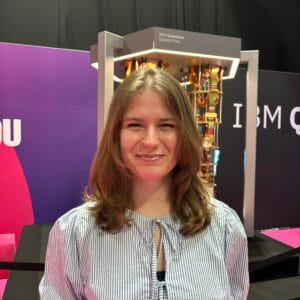
Student: Marta Orwat
Primary Supervisor: Professor Martin Weides
Project Description: This PhD project aims to revolutionize quantum computing by advancing Transmon qubit fabrication, with a focus on Nb/AlOx/Nb tunnel barriers using a trilayer process pioneered at the University of Glasgow, based on work from the University of Chicago (Phys. Rev. Applied 21, 024047, 2024). This novel approach eliminates dielectric spacers, significantly improving coherence and operational efficiency, including potential operation at higher temperatures. The project has strong academic and industrial relevance, culminating in a fabricated four-qubit Transmon chip by project end.
Short Bio: I am a second-year PhD researcher in the Quantum Circuits Group within the James Watt School of Engineering at the University of Glasgow. My PhD is funded and co-supervised by the National Quantum Computing Centre (NQCC). My research involves the design, fabrication, and characterisation of transmon qubits based on Nb/AlOₓ/Nb trilayer Josephson junctions. I use electromagnetic simulations to optimise qubit and coupling architectures and carry out device fabrication at the James Watt Nanofabrication Centre. The main goal of my PhD is to develop a four-qubit chip with tuneable couplers that can serve as a building block for quantum error correction, contributing to the development of scalable superconducting quantum processors.